


David Pearce
Rock Art Studies
Nationality
South African
Qualifications
PhD: University of the Witwatersrand
Affiliations
Rock Art Research Institute, University of the Witwatersrand
ASAPA, SAfA


1. Describe your specialisation and what a typical "day in the field/lab" looks like for you?
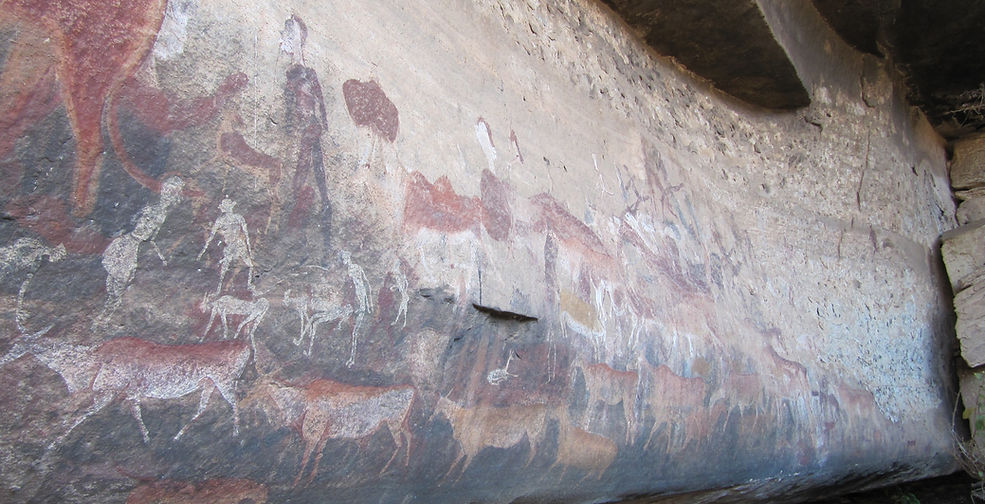
Studies of rock art in southern Africa focus largely on cognitive and social questions: what the art meant to its makers, what insights it provides us into religious systems and how it operated socially. Fortunately, South Africa is a world leader in this type of cognitive archaeology.
A typical day in the field might involve a stiff climb up a mountain and then many hours of careful photography or tracing of the art in a shelter. Much of the art in southern Africa is extremely fine with minute detail. It is consideration of this detail combined with analysis of ethnographic sources that allows for understanding of meaning.
_JPG.jpg)
2. What technical, analytical, or digital skills are important for this field?
Like much work in contemporary archaeology, the technical work of recording rock art involves a lot of use of digital techniques, particularly digital photography, the building of 2D and 3D photographic models and digital drawing. The type of skills needed, however, vary considerably depending on the type of site and the objectives of the research.
.jpg)
3. What qualifications, internships, or specialised training helped you break into this field?
To work professionally on rock art requires degrees in Archaeology. I was fortunate to do my graduate training at the University of the Witwatersrand’s Rock Art Research Institute, the leading centre for such research on the continent. The critical mass of resources and researchers there paved the way for my development in the field. I never undertook any internships (I don’t think such things existed) but did take every opportunity I could to get into the field to work on and see sites as well as to become involved with any lab work that was going. Familiarity with sites and development of skills is essential for success.

4. How does your work change or enhance our understanding of the past in a way that 'general archaeology' might miss?
Most rock art in southern Africa relates to religious beliefs and practices. As such, it allows us insights into cognitive aspects of past societies that are often not accessible to broader archaeological study. Such insights are crucial because the cognitive ideations (their ontologies, epistemologies, metaphysical positions and ideology) of peoples inform every aspect of their lives. Rock art is one of the few ways we can access this knowledge.

5. What are some unique challenges and rewards of this field?
Saying something meaningful about rock art is difficult; it requires bringing together several disparate bodies of knowledge—the rock art itself, ethnography and neuropsychology—using appropriate methodological tools (analogical arguments, natural models etc.) and drawing on appropriate theory. Doing so, conceptually and empirically, is difficult. On the other hand, the benefits of doing this are immense: one may gain insights into the past not accessible by other means.

6. What is one resource or habit a student should adopt if they want to step into this field?
If you want to work in this field, get out and see some rock art. Get a feel for the sites and the type of physical challenges involved in working on them. But then also read: a great deal is known about southern African rock art but there is also still much to learn. A familiarity with sites needs to be matched by familiarity with the extensive rock art, ethnographic and methodological literatures.
