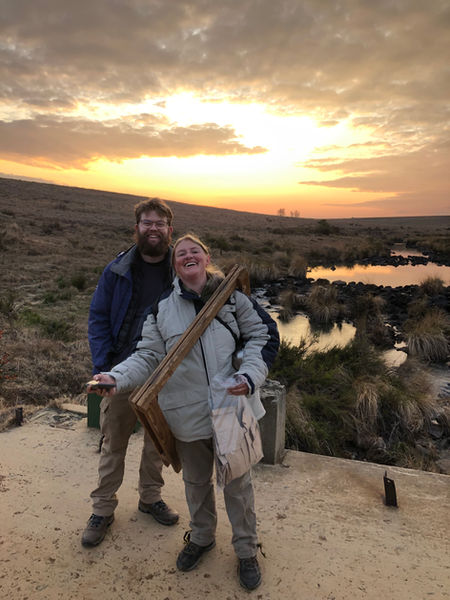
Kathryn Croll
Zooarchaeology
Nationality
South African
Qualifications
BSc, BSc Honours, MSc: University of Witwatersrand
MSc: University College Dublin
PhD: University of Witwatersrand
Affiliations
Lecturer (Archaeology): University of Pretoria
ASAPA, SAfA, ICAZ, PAA, STeLAH, Association of Zooarchaeologists of Southern Africa

1. Describe your specialisation and what a typical "day in the field/lab" looks like for you?
Archaeozoology is the archaeological specialisation in animal remains (archaeofauna). Archaeozoologists examine the animal bones and related cultural material (such as worked bone) to answer questions ranging from what did people in the past eat, how did they hunt, and/or can we see relationships of care between humans and animals in the faunal record? A day in the field for an archaeozoologist usually involves the same tasks and skills that other archaeologists use to excavate and understand archaeological sites. We are also on standby to assist with appropriate removal of animal bones from the excavations to ensure minimal damage. Once the faunal remains arrive in the laboratory, we will organise the animal bones into categories based on how much of the full, original bone remains. These categories include ribs, crania, long bone shafts, bone flakes and fragments and pieces which can be identified to taxa (such as femurs or scapulae). These categories can be used to understand skeletal part representations or to investigate which species or taxa were accessed by past communities. Archaeozoologists also examine taphonomic data (those data that give us information about what happened to the bones from the death of the animal to their excavation and curation). Taphonomic data can include cut marks, tooth marks, and/or staining from the surrounding soil or the effects of fire on the bones.
2. What technical, analytical, or digital skills are important for this field?
Archaeozoology can be learned by anyone with an interest in the past and human-animal relationships. The skills you can learn, and which are important to this specialisation, include learning how to use microscopes, Microsoft Excel, and knowledge of the skeletons of mammals. Just as important as these specialised skills are more general archaeological skills, such as understanding stratigraphy, relative dating, and archaeological context.


3. What qualifications, internships, or specialised training helped you break into this field?
I came to archaeozoology late in my academic career but I have always had an interest in bones and what they can tell us. Becoming specialised as an archaeozoologist happened during my postgraduate studies towards a PhD. I was trained during this time by other archaeozoologists (Dr Jerome Reynard and Dr Shaw Badenhorst) and continue to learn from other archaeozoologists, such as Dr Annie Antonites and Mrs Louisa Hutten. Spending time with other specialists and looking at plenty of archaeological faunal remains has helped greatly expand my knowledge of this specialisation.
4. How does your work change or enhance our understanding of the past in a way that 'general archaeology' might miss?
The addition of understanding the faunal remains from any archaeological site can further our understanding of how past humans interacted and engaged with each other, the environment, and animals as well as provide details about herding and hunting strategies, additional resource use (such as using bones to work stone, hides, or smooth pottery) and provide information about the use of animals in ritual circumstances.

5. What are some unique challenges and rewards of this field?
Some unique challenges related to archaeozoology are similar to challenges which other specialists face – such as fragmentary bones making the task of identification difficult, if not impossible. Additionally, if there were issues with the excavations (such as missing notes or different excavation methods), this makes drawing intra- and inter-site comparisons difficult. For me, the most rewarding part of being an archaeozoologist is identifying a particularly tricky bone or identifying a rare species (e.g., a large spotted genet). The other most rewarding part is being able to talk about (and look at) bones as part of my job!
6. What is one resource or habit a student should adopt if they want to step into this field?
There is one habit that you should develop if you want to specialise in archaeozoology: Patience, endless patience - sifting through broken, fragmented bones or sorting very small fish vertebrae into size categories requires patience.